
Spray Tan Solution Beginner Guide
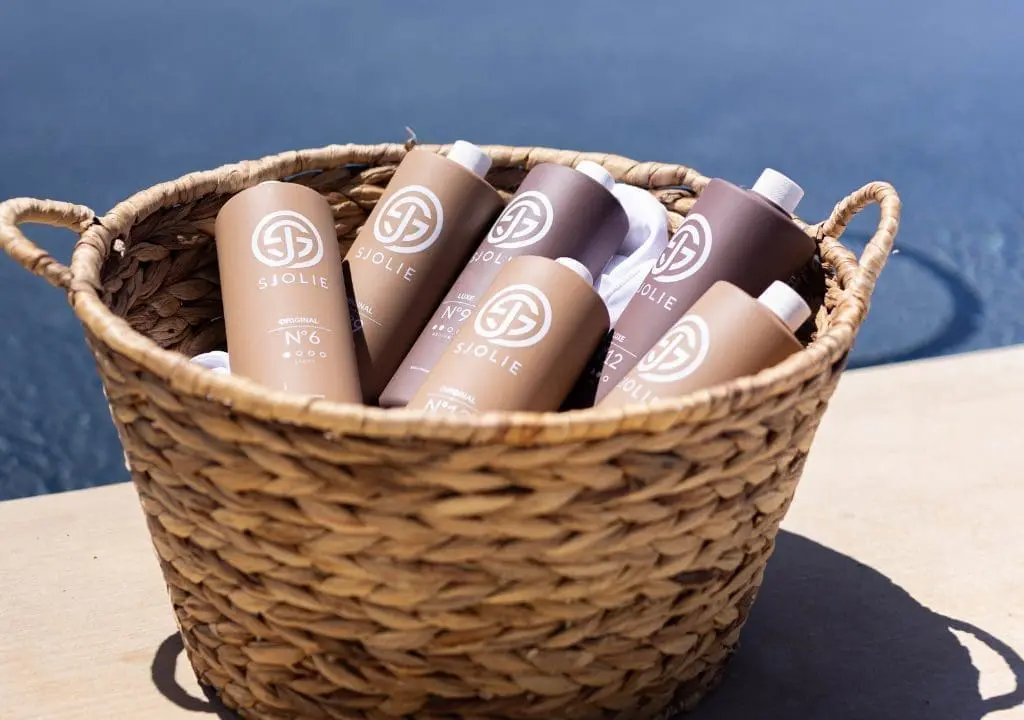
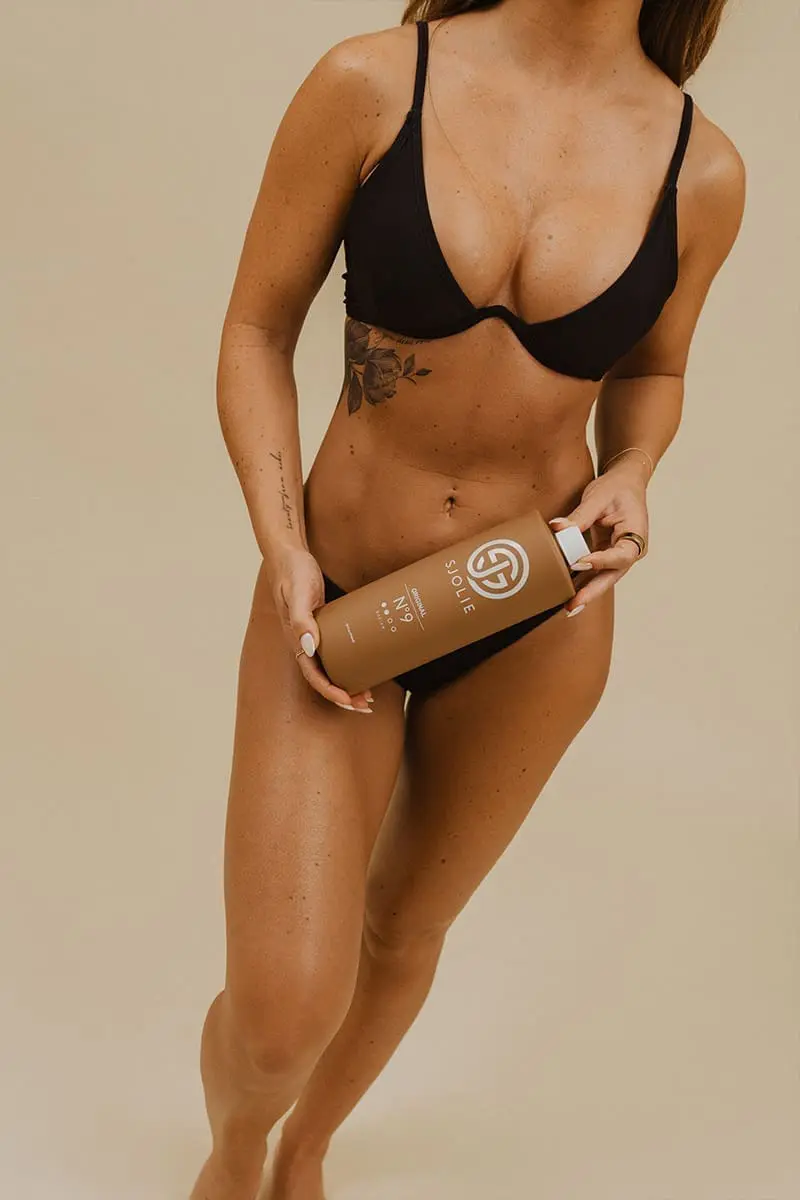
THE COMPLETE GUIDE
Spray Tan Solution Guide — DHA, Undertones & Choosing the Right Formula
This is the definitive resource for spray tan professionals. Master the science of DHA, understand how undertones shift color perception, navigate our full formula lineup, and learn the preparation and aftercare protocols that deliver consistent, flawless results — every time.
WATCH & LEARN
Spray Tan Solution Overview
Watch our complete walkthrough of Sjolie spray tan solutions — covering the full lineup, DHA levels, undertones, and how to choose the right formula for every client.
THE FUNDAMENTALS
What Is Spray Tanning?
Spray tanning applies a fine mist of tanning solution to the skin via HVLP or airbrush systems. The active ingredient — DHA (dihydroxyacetone) — reacts with amino acids in the stratum corneum, the outermost layer of the skin, through a process called the Maillard reaction. This produces melanoidins, compounds that create the appearance of a natural tan. The reaction occurs entirely on the surface of the skin and does not penetrate deeper layers such as the stratum basale or the dermis, making it a safe and non-invasive cosmetic procedure.
The process is purely cosmetic and does not alter the structure or function of the skin cells. As the stratum corneum sheds naturally over 5–10 days, the tan fades evenly. The characteristic “spray tan smell” is a byproduct of this DHA-amino acid reaction — not an added fragrance. Sjolie solutions include scent additives to soften this effect.
How to Spray Tan
Watch the full spray tan application process from start to finish — covering technique, equipment, and the step-by-step workflow that delivers professional results.
The Skin Cycle & Why It Matters
Your skin undergoes a continuous rejuvenation cycle that directly determines how long a spray tan lasts. New cells are born in the deepest layer of the epidermis and gradually rise to the surface, eventually shedding as dead skin. On average, this entire process takes approximately 28 days — though it can range from 14–21 days in young adults (ages 19–21) to 40–60 days in mature skin. Approximately 25% of the skin’s outermost layer sheds each week, which is why a spray tan gradually fades rather than disappearing all at once.
This is also why pre-tan exfoliation is so important: by removing the oldest layer of dead cells before your appointment, the DHA bonds with fresher, longer-lived skin cells — resulting in a tan that develops more evenly and lasts significantly longer.
The Role of pH in Spray Tanning
The skin’s pH level plays a crucial role in how well DHA absorbs and develops. Skin pH is measured on a scale from 0 to 14, with the ideal range for healthy skin falling between 4.5 and 5.5. This slightly acidic environment supports optimal cell turnover, hydration, and the skin’s protective acid mantle — all of which contribute to a better spray tan result.
Several factors can disrupt the skin’s pH before an appointment: wearing deodorant, perfume, or lotions; sweat and stress throughout the day; exercising before the session; harsh cleansers with high pH levels; and hormonal changes related to the menstrual cycle or pregnancy. This is why arriving with clean, product-free skin is essential — and why many technicians use a pH Balancer spray before application to restore optimal acidity levels.
THE SCIENCE
Understanding DHA Levels
DHA (dihydroxyacetone) is the only FDA-approved sunless tanning ingredient. Derived from plant sources like sugar beets and sugar cane, it reacts with amino acids in the skin’s outer layer to produce temporary color. Higher DHA percentage equals deeper tan depth.
| Solution | DHA % | Base | Undertone | Best For (Fitzpatrick) | Longevity |
|---|---|---|---|---|---|
| Original N°6 | 6% | Aloe Vera | Olive | I–II (Fair) | Up to 10 days |
| Original N°9 | 9% | Aloe Vera | Olive | II–III (Medium) | Up to 10 days |
| Original N°12 | 12% | Aloe Vera | Olive | IV–V (Dark) | Up to 10 days |
| Original N°14 | 14% | Aloe Vera | Olive | V–VI (Deep) | Up to 10 days |
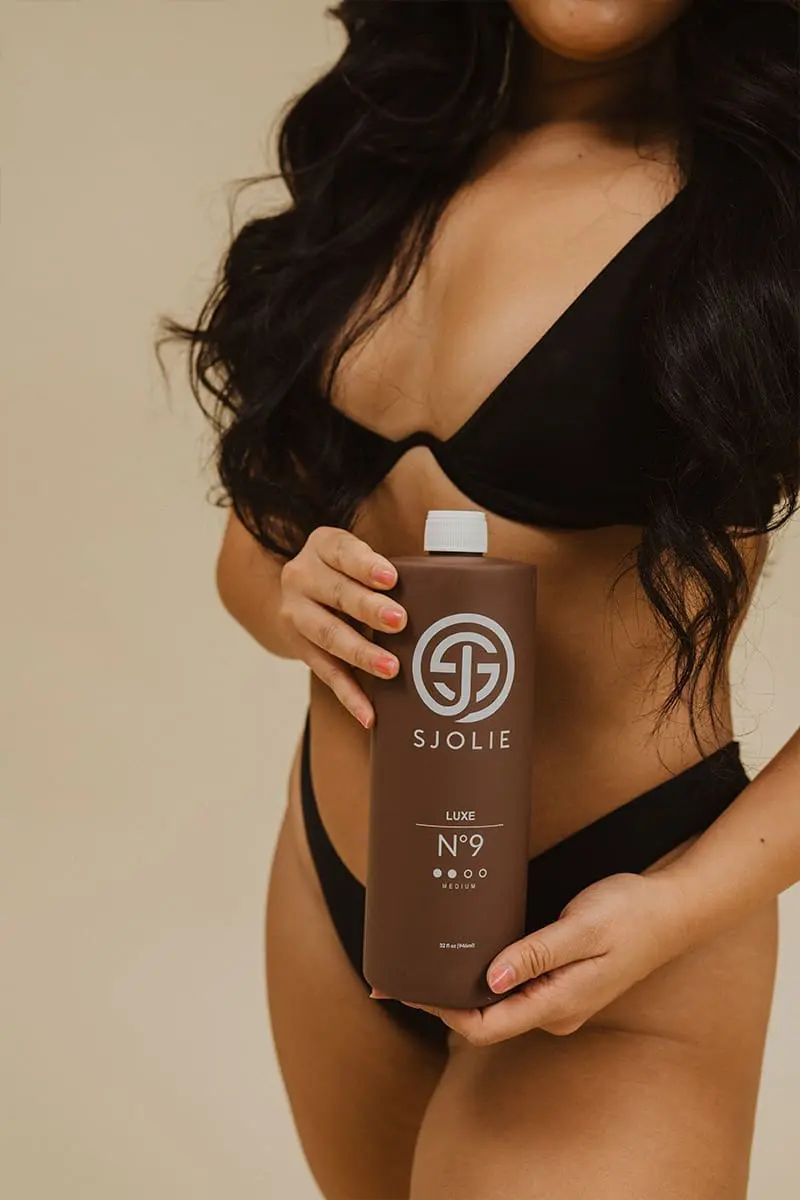
| Luxe N°9 | 9% | Alcohol | Violet | II–III (Medium) | Up to 7 days |
| Luxe N°12 | 12% | Alcohol | Violet | IV–V (Dark) | Up to 7 days |
| Original Rapid | 18% | Alcohol | Olive | All types | 1–5 hr rinse |
| Luxe Rapid | 18% | Alcohol | Violet | All types | 1–5 hr rinse |
| Clear N°9 | 9% | Aloe Vera | None | II–III (Medium) | Up to 10 days |
CLEAN FORMULA STANDARD
What We Leave Out
Every Sjolie formula is built on a commitment to clean, professional-grade ingredients. We exclude compounds that compromise skin health or tan consistency.

Parabens
Preservatives linked to skin irritation and potential hormonal disruption.

Erythrulose
Not FDA-approved. Can cause skin sensitivities and allergic reactions.
Urea
Synthetic compound that can irritate sensitive or dry skin.
Mineral Oils
Can clog pores and cause breakouts, especially on acne-prone skin.

Phthalates
Chemicals linked to various health concerns, used to improve scent and texture in some products.

Gluten
Avoided for clients with celiac disease or gluten sensitivity.
SKIN TYPE CLASSIFICATION
The Fitzpatrick Scale — Matching Solutions to Skin Types
Developed by dermatologist Thomas Fitzpatrick in 1975, this classification system identifies skin types I–VI based on how the skin responds to sun exposure. Ranging from 1 (the lightest) to 6 (the darkest), the Fitzpatrick Scale is the most widely used framework in professional spray tanning for matching a client to the right DHA percentage and undertone. Combined with an undertone assessment, it removes the guesswork from solution selection.
| Skin Type | Characteristics | Sun Response | Recommended Solutions |
|---|---|---|---|
| Type I | Pale, ivory white. Blonde or red hair, light eyes, freckles | Always burns, never tans | Original N°6, Rapid |
| Type II | Fair, beige. Light hair and eyes, can have dark features | Burns easily, tans with difficulty | Original N°6, N°9, Rapid |
| Type III | Light to medium. Most common type, hair and eye color varies | Sometimes burns, gradually tans | Original N°9, Luxe N°9, Rapid |
| Type IV | Medium brown. Brown or dark hair | Rarely burns, tans easily | Original N°12, Luxe N°12, Rapid |
| Type V | Deep brown. Black or dark hair and eyes | May never burn, tans easily | Original N°12, N°14, Luxe N°12, Rapid |
| Type VI | Black. Black or dark hair and eyes | Never burns | Original N°14, Rapid |
COLOR SCIENCE
Undertones & How Sjolie Uses Color Theory
Undertones — the subtle color beneath the skin’s surface — fall into three categories: cool (pink, red, bluish hues), warm (yellow, golden, peachy hues), and neutral (a combination of both). Identifying a client’s undertone is essential for choosing the right solution, because the wrong match can produce ashy, orange, or unnatural-looking results.
How to identify undertones: There are several reliable methods. Check the veins on the inner wrist — blue or purple veins indicate cool undertones, green or olive veins indicate warm, and blue-green veins suggest neutral. Jewelry preference is another indicator: cool undertones tend to look best in silver, warm undertones in gold, and neutral undertones suit both. Sun response matters too — cool skin tends to burn and turn pink, warm skin tans easily and turns golden, and neutral skin may burn slightly before tanning.
Sjolie uses the principle of complementary colors — colors opposite each other on the color wheel — to ensure each formula harmonizes with the client’s natural skin tone rather than fighting against it. The Original Line carries an olive/green undertone that counteracts pink and red hues in cool skin tones, delivering a golden-brown result. The Luxe Line carries a violet undertone that deepens yellow tones in warm skin, producing a rich chocolate-brown finish. Neutral undertones work beautifully with either line.
Cosmetic bronzers in every formula are sourced from organically derived ingredients — caramel and walnut husk extract — providing an instant color guide for technicians while the DHA develops underneath. While most cosmetic bronzers wash off in the shower, they leave a subtle staining effect that tints the skin in harmony with the undertone used, bridging the gap between application and full DHA development.
SOLUTION COMPARISON
Original Line vs. Luxe Line — Side by Side
| Feature | Original Line | Luxe Line |
|---|---|---|
| Base | Aloe Vera | Alcohol |
| Undertone | Olive (green) | Violet |
| Best for undertone | Cool & Neutral | Warm & Neutral |
| Tan result | Golden, sun-kissed | Deep chocolate-brown |
| Dry feel | Moisturizing | Quick-dry |
| Longevity | Up to 10 days | Up to 7 days |
| DHA range | 6%–14% | 9%–12% |
Not sure where to begin? We recommend starting with Original N°9 and Luxe N°9 — both at 9% DHA, they provide medium-depth color that works across most skin types. Gain experience with 20–30 tans before mixing or moving to extreme depths.
SPECIALTY FORMULAS
Rapid, Clear & Education Solutions
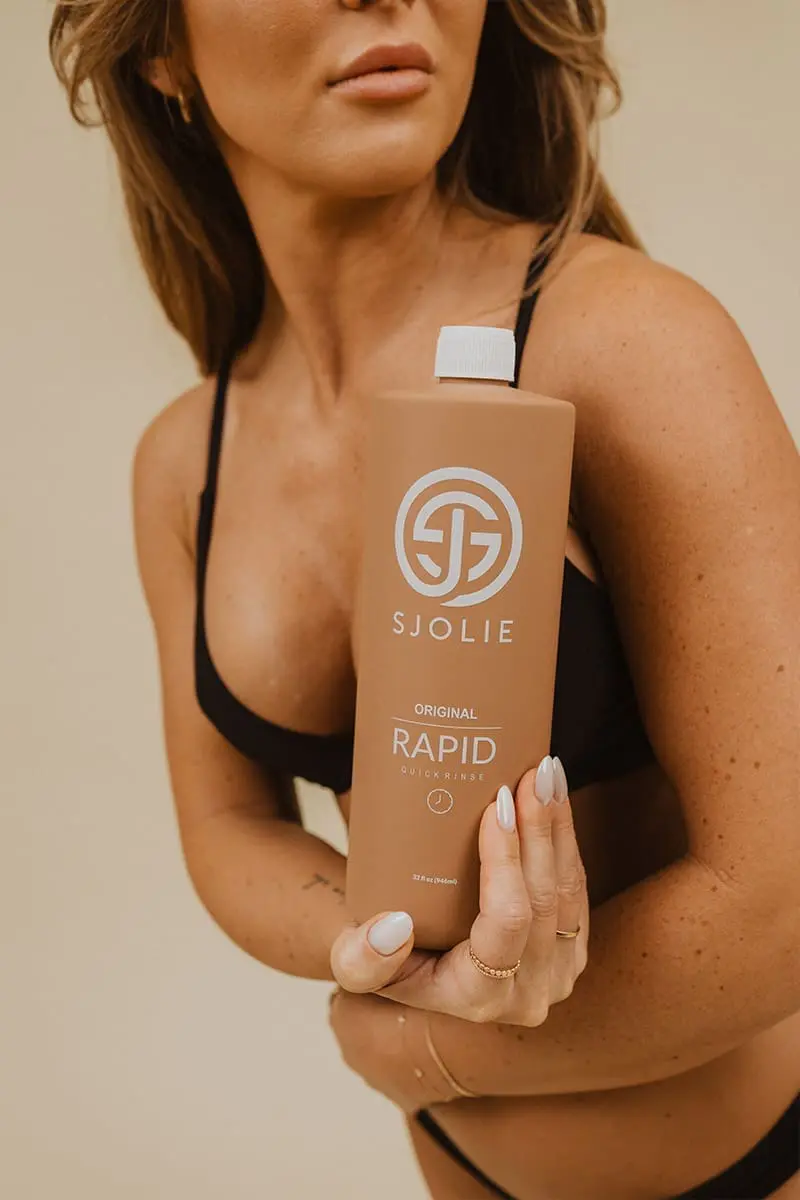
Rapid. 18% DHA, alcohol-based. Available in both Original (olive) and Luxe (violet) undertones. Clients rinse in 1–5 hours instead of the standard 8-hour overnight develop. The DHA continues developing for up to 24 hours after rinsing — an earlier rinse produces a lighter result, while a later rinse delivers deeper color. This gives the technician and client precise control over tan depth from a single formula, making Rapid ideal for events, last-minute appointments, and clients who prefer a shorter wear time before their first shower.
Clear N°9. 9% DHA, aloe vera base, with no cosmetic bronzers — meaning no visible color at application. Features a green tea scent instead of the standard bronzer fragrance. Clear is perfect for brides who cannot risk any bronzer transfer onto white dresses or linens, mature clients who want a no-fuss application, and anyone who dislikes the look or feel of cosmetic bronzer on the skin. Because there is no bronzer guide coat, technicians should apply under good lighting and work methodically to ensure full coverage.
Education Blend. Contains no DHA — only temporary cosmetic color that washes off completely in one shower. Designed specifically for spray tan students and training environments where repeated practice is needed without building DHA on the skin. Also a smart option for clients with known DHA sensitivity who still want the experience of a spray tan for a special event.
PREPARATION
Client Prep for the Perfect Tan
Achieving a perfect spray tan requires effort and cooperation from both the technician and the client. Watch our complete before-checklist walkthrough, then follow the steps below.
48+ HOURS BEFORE
Schedule waxing, hair services, nails, facials, and massage at least 48 hours prior. This allows the skin to settle and reduces irritation during spray tanning.
24 HOURS BEFORE
Shave and exfoliate with a spa-grade exfoliator. Focus on often-missed areas: back, stomach, and chest. Remove dead skin to ensure even DHA absorption.
DAY OF
Arrive with a fresh face. No lotions, makeup, deodorant, or topical products. If a shower is necessary, shower early and skip soap and conditioner to preserve natural skin oils.
WHAT TO WEAR
Dark, loose-fitting clothing. Long sleeves and pants minimize contact. Avoid bras, socks, and closed-toe shoes. Provide disposable undergarments for client safety.
AFTERCARE
Post-Tan Care for Lasting Results
Proper aftercare is the difference between a tan that lasts 5 days and one that lasts 10. Watch our aftercare guide, then follow these five essential steps.
MOISTURIZE DAILY
Apply a daily moisturizer like Sjolie Body Renew & Tan Extend to lock in color and ensure even fading. Hydrated skin extends tan longevity.
SKIP EXFOLIATION
Avoid physical exfoliants, shaving, waxing, microdermabrasion, and chemical exfoliants. These accelerate skin cell shedding and fade the tan prematurely.
SHORTER SHOWERS
Keep showers cool and brief. Pat dry gently — never rub. Prolonged water exposure breaks down the tan faster.
MINIMIZE SWIMMING
Chlorine and saltwater accelerate fading. Keep pool and ocean time short when preserving your tan matters.
LOOSE CLOTHING
Wear dark, non-restrictive clothing. Tight garments and friction cause uneven fading. Give the tan room to breathe and settle.


Frequently Asked Questions
DHA (dihydroxyacetone) is the only FDA-approved sunless tanning ingredient. Derived from plant sources like sugar beets and sugar cane, it reacts with amino acids in the outermost layer of skin to create temporary color. It does not penetrate beyond the skin surface and is considered safe for external cosmetic use.