
Best Spray Tan at Home: The Step-by-Step Method for Pro Results
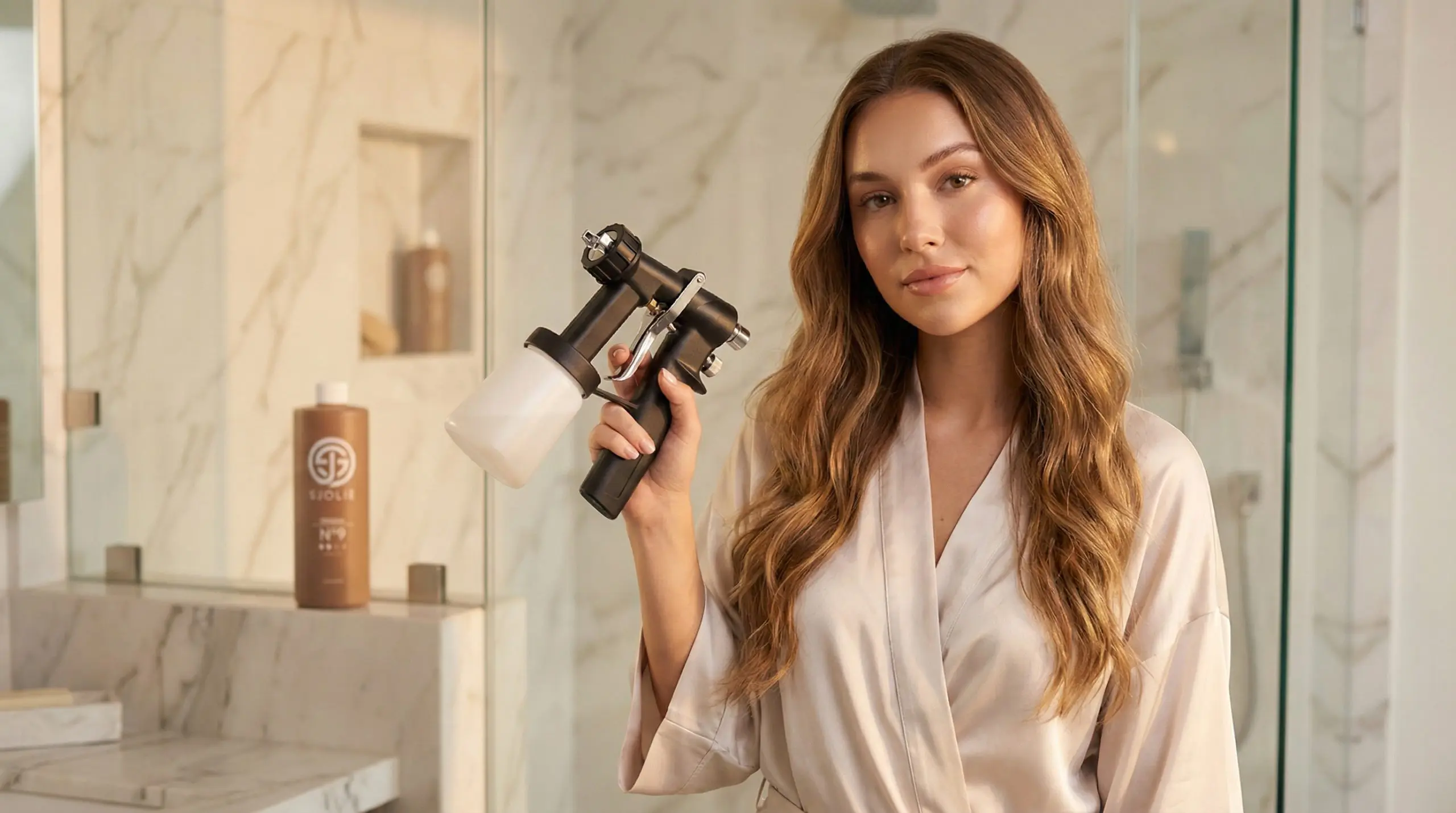
If you’ve ever searched for the best spray tan at home, you already know the truth: the difference between “pretty good” and “wow, that looks professional” is almost never luck. It’s prep + the right mist + one clean coat + smart aftercare.
This guide walks you through the exact, repeatable method pros use to get smooth, even color—without streaks, orange tones, or patchy fading. (And yes: you can absolutely do this at home.)
Prepping skin the day before
Spraying at a consistent angle + distance
One light, even coat (don’t layer)
Rinsing at the right time + moisturizing daily
You’ll see links to the exact at-home setup and solution that make this method easy to repeat.
Why this “pro results” method works (even at home)
The “best spray tan at home” isn’t about blasting on more product or going darker. It’s about even distribution. When solution hits the skin consistently (same angle, same distance, steady speed), you get:
A fine, controlled mist helps avoid heavy passes that turn into streaks and dark patches.
Choosing the right depth + undertone helps prevent orange development and keeps the result “skin-like.”
Even application + daily hydration = less patchy shedding and a longer-lasting glow.
If your past at-home tans were streaky or patchy, don’t assume it’s “your skin.” Most of the time, it’s one of these fixable issues: prep timing, residue (lotions/perfume), inconsistent technique, or too much product.
What you’ll need for the best spray tan at home
You don’t need a complicated routine. You need a consistent mist, the right solution, and a prep plan you’ll actually follow.
If you want “booth-like” smoothness at home, HVLP mist control is the shortcut. A compact setup is easy to store, easy to clean, and easy to repeat.
Apollo Mini Mist® Essentials Starter Kit
Prefer machine-only? Apollo T100 Mini Mist®
A medium depth with an olive undertone is a favorite for a reason—it reads natural and helps neutralize overly warm/orange-looking results on many skin tones.
Exfoliation + shaving (timed correctly)
pH balancing + barrier protection (for a cleaner blend)
Dark, loose clothing for development
Tip: The Essentials Kit includes prep must-haves like pH Balancing Spray and Barrier Cream, so you’re not piecing everything together.
Good ventilation
A towel or mat under feet
A simple backdrop (or optional tent)
Set yourself up so you can focus on technique—not cleanup.
Prep (the day before): the secret to an even tan
Prep is where most at-home tans go wrong—not because people skip it, but because they do it at the wrong time.
Exfoliate thoroughly (especially ankles, knees, elbows)
Shave (use a sharp razor; avoid residue-heavy strips)
Moisturize lightly if you’re dry—then stop (no heavy lotions day-of)
No lotions, perfume, or makeup on the skin you’re tanning
If you must use products, shower several hours before you spray
Wear loose, dark clothing while developing
Why timing matters: shaving/exfoliating too close to your spray can affect how evenly solution develops—especially on lower legs. Your goal is calm, clean, residue-free skin.
Spray setup: get the machine + solution ready (without overthinking it)
A consistent at-home spray tan is about repeatability. Do your setup the same way every time.
Only spray tan prepped, dry skin. If you’re sweaty, hot, or freshly showered, wait until your skin is completely cool and dry.
A great pro habit: don’t guess. For a full-body tan, start with about 2 oz (50 ml) of solution in the cup. Add more only if truly needed (most people apply too much).
Want the exact solution referenced here? Original N°9 Medium
Before you spray your body, test your pattern on a towel or paper. You want a light, even mist—not a wet stripe.
Hands, feet, knees, elbows, and knuckles tend to drink up extra color. Use a barrier product sparingly in these areas and blend lightly. (If you’re using the Essentials Kit, Barrier Cream + pH Balancing Spray are already included.)
Want the simplest “pro setup” at home?
If you’d like everything in one place (machine + applicator + prep essentials + solutions), the Essentials kit is built for serious at-home users who want repeatable results.
The step-by-step method for pro results
Use this exact order every time. Your goal is one light coat that hits the skin evenly from head to toe—no “touch-ups” that turn into dark patches.
Hold the applicator so it stays square to the skin (not tilted). A consistent angle is one of the biggest differences between a “home” tan and a “pro” tan.
Don’t speed up on your lower legs or back away from the body as you get tired—this is where “lack of development” and patchiness happen. Think: steady pace, same spacing, same pressure.
Back of legs → front of legs
Hips + torso
Arms (outside → inside)
Back
Chest/shoulders
More product does not mean better color—it usually means darker pores, streaks, and an uneven fade. If you want deeper color next time, adjust shade choice or develop longer (per directions), not extra coats.
A quick dry-down between sections helps prevent transfer and keeps your coat clean and even. Make sure skin feels dry to the touch before you move to clothing.
These areas are detail zones. Use minimal product, keep the pass light, and blend. If you see a “wet look,” it’s probably too much.
Pro tip: If you’re using a guide-color solution like Original N°9, trust the technique—not the bronzer. You’re laying down an even coat; the final color develops after the rinse and continues to deepen over the next day.
Rinse + timing: when to wash off (and what “full color” really means)
Most “my tan didn’t develop” complaints are timing issues. Here’s the simple rule: rinse at the recommended development time, and expect the final shade to settle in later.
For Original N°9, wait 8 hours before rinsing. Rinse with warm water and avoid soaps during the initial rinse.
After the first rinse, you may look lighter than expected. That’s normal. Your true result continues to develop and typically looks most “finished” around 24 hours after application.
Avoid sweating, water, and tight clothing
Skip bras/straps if they rub or press
Don’t “spot fix” with extra coats
If you rinse too soon, you’ll get lighter results and more uneven development (especially on lower legs). If you leave it on too long without proper aftercare, you can end up dry and patchy—so timing and hydration go together.
Aftercare: how to make your at-home spray tan last (and fade evenly)
If you want the “best spray tan at home” to look good for days—not just the first night—aftercare is your multiplier. Your goal is simple: keep skin hydrated and avoid aggressive exfoliation.
Use a spray-tan-safe moisturizer every morning to support an even fade.
A subtle tan extender can help your color stay fresh while keeping the fade smooth.
Hot baths/saunas immediately after tanning
Chlorine/saltwater without rinsing + moisturizing after
Harsh scrubs or exfoliating acids too soon
Daily friction (tight jeans, straps, sports bras)
Most patchy fading is not a “bad solution”—it’s dry skin shedding unevenly. Keep hydration consistent and you’ll be shocked how professional the fade looks.
Troubleshooting: fix the most common at-home spray tan issues
Fix: Don’t automatically go darker. First, check undertone choice and remove residues (lotions, perfume, makeup). Keep your coat light and even. Orange development is often an external-factor issue, not a “product failure.”
Fix: Most people speed up or spray from farther away on lower legs. Slow down, keep the applicator square to skin, and maintain the same distance you used on the torso.
Fix: Hydrate daily, avoid aggressive exfoliation, and reduce friction. Patchiness is usually dryness + shedding, not too little product.
Fix: Use barrier lightly, do a minimal pass, and blend. Next time, treat hands/feet as “detail zones,” not full-body zones.
If you only remember one troubleshooting rule: don’t layer. Extra coats rarely fix a tan—they usually create new problems.
FAQs: Best spray tan at home
Quick answers to the questions people ask most when they’re trying to get pro-looking results at home.
Prep + Setup
Yes. Exfoliating the day before helps create a smooth canvas so solution develops evenly. Doing it too close to your spray tan can make skin reactive and contribute to uneven development—especially on lower legs.
Before—ideally about 24 hours before. Shaving immediately before can affect how evenly the solution absorbs. If you must shave day-of, do it very early and ensure skin is calm, clean, and residue-free before spraying.
Avoid lotions, perfume, makeup, and any body products on the skin you’re tanning. If you used anything, shower several hours before and let skin fully dry and cool.
Application + Timing
A great starting point is about 2 oz (50 ml) per full-body tan. Most streaks and dark patches come from using too much product or layering coats.
Because layering increases the chance of uneven development, dark pores, and patchy fading. A single, even coat is the most reliable way to get smooth color.
Always follow the solution’s instructions. For an 8-hour formula like Original N°9, rinse after 8 hours with warm water and skip soap during the first rinse.
Aftercare + Troubleshooting
Totally normal. The initial rinse removes guide color and residue. Your final color continues developing and typically looks most complete around 24 hours after application.
Moisturize daily, avoid aggressive exfoliation, and reduce friction from tight clothing. Hydrated skin holds color longer and fades more evenly.
The biggest cause is dry skin shedding unevenly, plus friction and long water exposure. Hydrate daily and avoid harsh scrubs—your fade will look dramatically smoother.
Start with undertone-appropriate color, keep skin residue-free, and apply a light, even coat. Orange development is often about external factors (products, hormones, undertone mismatch), not simply “needing a darker shade.”
Ready to make this method effortless to repeat? Start with a consistent HVLP mist setup and a dependable medium shade.