
Consumer Demand for Customized Services Is Reshaping the Beauty Market
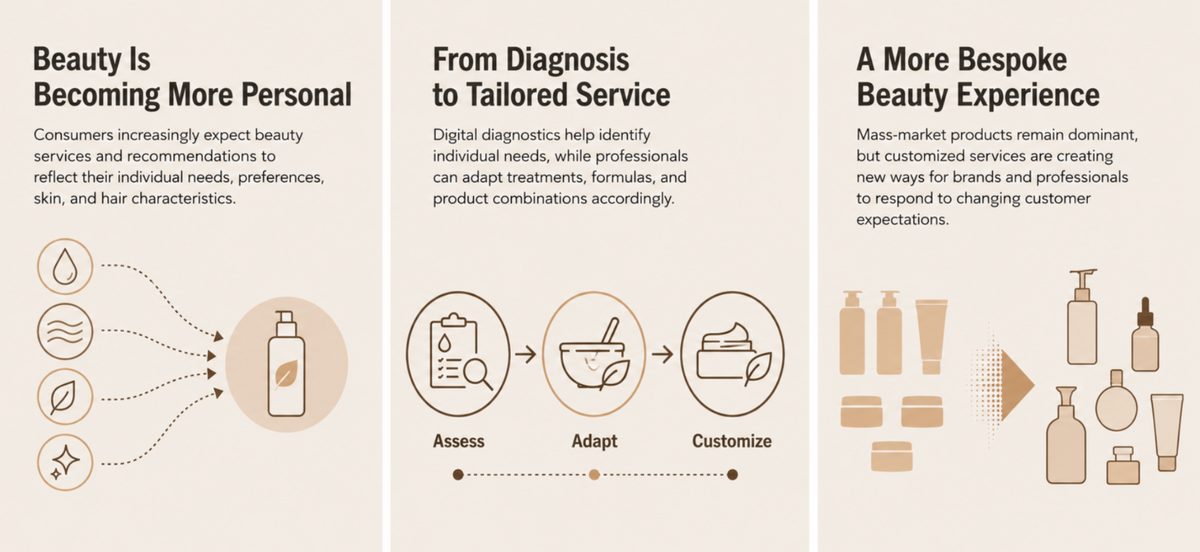
The global cosmetics market alone is expected to reach nearly $140 billion by 2030. Whether a business is able to capitalize on this growth depends on how they respond to changing client demands.
Artificial intelligence diagnostic tools and on-demand custom services are changing the way that beauty brands approach their clients. Personalization in the beauty industry leads to sales growth and an increase in market share. Relying on the same stock-keeping unit (SKU)-based system of the past several decades leaves companies at risk of losing their customer base.
While hyperpersonalized products formulated for individual customers are not yet mainstream, they can lead to greater brand loyalty.
The beauty market is changing, and brands that want to stay relevant must pay attention. SJOLIE, a provider of professional-grade spray tanning solutions, examined how demand for customized services is reshaping the beauty industry.
Customers’ Preference for Customized Services
Before the 20th-century mass-production boom tried to standardize and box up beauty, everyone had their own practices.
Beauty was a highly bespoke, localized, and segmented market because raw ingredients and specialists were only available locally. Makeup (like cheek stains, lip pomades, and setting powders) was mixed at home to match individual complexions and regional climates.
The modern market is returning to a similar level of customization but with more knowledge, better ingredients, and more efficient production methods. The service experience has also improved, mostly due to new technologies and procedures.
Today’s customers expect certain types of customized services from brands and professionals operating in the beauty market.
Diagnostic and Analytical Services
Customization works with accurate data. One of the fastest-growing trends is personalized diagnostic services that help specialists and brands make informed recommendations that truly fit the client’s needs.
Roughly 61% of beauty brands now use digital tools (like AI diagnostic quizzes or skin analysis tools) to offer personalized recommendations. Large brands are buying or building customization tech (L’Oréal’s Perso device platform or Function of Beauty’s acquisition of Atolla).
In-Salon Modular Treatments
Modular treatments are where the collected data impacts physical services; where traditional procedures can be refined based on the diagnostic results.
An aesthetician can boost a standard hydrating facial to a highly personalized skin care session by mixing specific active serums into a base cream based on that day’s skin state. A hairstylist will be able to blend a bespoke ratio of protein (for strength) and lipid masks (for moisture) based on the client’s hair porosity and scalp condition.
On-Demand Custom Manufacturing Services
Instead of browsing through dozens of color options for lipstick and foundation until they find the ones that fit their skin tone, customers can ask a beauty advisor to create the perfect blend.
According to consumer analytics from Business Research Insights, roughly 67% of consumers prefer customized formulations.
Brands in the beauty market have taken notice in this change of customer demand. The most prominent example comes from Lip Lab, a beauty retailer where a specialist mixes pigments live in front of the client, adjusts texture (matte, glossy, satin), and adds custom scents.
Other brands offer at-counter blending, where beauty advisors blend bespoke essential oil fragrances, custom hair tonics, or tinted moisturizers at a dedicated compounding counter based on a client’s specific preferences.
Are Customized Services Reshaping the Beauty Market?
Brands that use AI diagnostic tools and personalization engines report revenue growth rates 2.3 times higher than brands relying strictly on standard SKU catalog models.
Customers are even willing to pay more for personalized beauty formulations and tailored services. Yet, the global beauty market is still dominated by off-the-shelf mass and prestige products.
The beauty market is changing with specific segments of customers. Given time and better integration, more buyers will be swayed by customized services and, eventually, products. Brands that refine their business models now will be in a better position to adapt to clients who want more of a bespoke experience.